Introduction
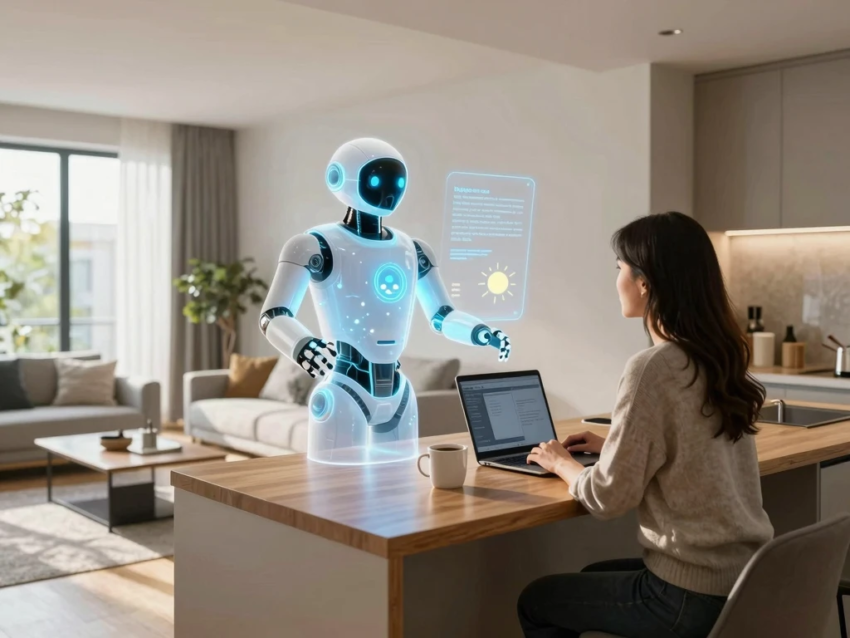
Artificial Intelligence (AI) has become an essential part of modern life, changing how people communicate, work, shop, and manage daily tasks. One of the most visible and widely used applications of AI is the virtual assistant. From setting reminders and answering questions to controlling smart home devices and helping businesses automate customer support, virtual assistants have transformed the way people interact with technology.
Today, millions of individuals rely on AI-powered virtual assistants through smartphones, smart speakers, computers, and wearable devices. These intelligent systems understand voice commands, process natural language, and perform tasks that once required manual effort.
In this comprehensive guide, you’ll learn what virtual assistants are, how they work, their key features, benefits, challenges, real-world applications, and why they are considered one of the most impactful AI innovations shaping everyday life.
What Are Virtual Assistants?
A virtual assistant is an AI-powered software application designed to understand human language and perform tasks based on voice or text commands. Unlike traditional software that requires users to navigate menus or type complex instructions, virtual assistants interact naturally through conversation.
These intelligent systems use technologies such as Artificial Intelligence (AI), Machine Learning (ML), Natural Language Processing (NLP), and speech recognition to understand user requests and provide accurate responses.
Virtual assistants can complete a wide range of tasks, including:
- Answering questions
- Setting reminders
- Scheduling appointments
- Sending messages
- Playing music
- Searching the internet
- Controlling smart home devices
- Providing weather updates
- Managing calendars
As AI continues to evolve, virtual assistants are becoming smarter, faster, and more capable of handling increasingly complex tasks.
How Virtual Assistants Work
Virtual assistants rely on several advanced AI technologies to understand and respond to user requests.
1. Voice or Text Input
The process begins when a user speaks or types a request.
For example:
- “Set an alarm for 7 AM.”
- “What’s the weather today?”
- “Play relaxing music.”
2. Speech Recognition
If the input is spoken, speech recognition technology converts the user’s voice into text that the system can analyze.
3. Natural Language Processing (NLP)
Natural Language Processing enables the virtual assistant to understand the meaning, intent, and context behind the user’s request rather than simply matching keywords.
4. Artificial Intelligence Processing
The AI system determines the appropriate action based on the request. It may search a knowledge base, access connected applications, or perform calculations to generate the correct response.
5. Response Generation
Finally, the assistant provides the answer through text, voice, or by completing the requested task.
This entire process usually takes only a few seconds, creating a smooth and natural user experience.
Key Features of Virtual Assistants
Modern virtual assistants offer numerous intelligent features.
Voice Recognition
They recognize and respond to spoken commands with increasing accuracy.
Natural Conversations
Advanced AI enables assistants to understand conversational language instead of requiring exact commands.
Task Automation
Virtual assistants automate repetitive tasks, saving users valuable time.
Personalized Recommendations
By learning user preferences, they provide customized suggestions and relevant information.
Smart Device Integration
Many virtual assistants connect with smart home devices, allowing users to control lights, thermostats, security systems, and appliances using voice commands.
Multi-Platform Support
Virtual assistants work across smartphones, computers, smart speakers, tablets, and wearable devices.
Benefits of Virtual Assistants
Virtual assistants provide significant advantages for both individuals and businesses.
Increased Productivity
Routine tasks such as scheduling meetings, setting reminders, and managing calendars can be completed automatically.
Hands-Free Convenience
Users can interact with technology while driving, cooking, exercising, or performing other activities.
Time Savings
Quick access to information and automated workflows reduce the time spent on everyday tasks.
Improved Accessibility
Voice-controlled interfaces help people with visual impairments or physical disabilities interact more easily with digital devices.
Better Customer Service
Businesses use AI-powered virtual assistants to provide instant support, answer common questions, and improve customer satisfaction.
Personalized Experiences
Virtual assistants remember preferences and deliver more relevant responses over time.
Challenges of Virtual Assistants
Despite their many advantages, virtual assistants also face several challenges.
Privacy Concerns
Since virtual assistants process voice recordings and personal information, protecting user privacy is a major priority.
Data Security
Organizations must ensure that user data is stored and transmitted securely to prevent unauthorized access.
Understanding Complex Requests
Although AI has improved significantly, virtual assistants may still struggle with highly complex, ambiguous, or context-dependent conversations.
Internet Dependency
Many virtual assistants require an internet connection to process requests using cloud-based AI services.
Language and Accent Recognition
Speech recognition systems may occasionally have difficulty understanding different accents, dialects, or languages, though continuous improvements are reducing these limitations.
Real-World Applications of Virtual Assistants
Virtual assistants have become valuable tools across many industries.
Personal Productivity
Individuals use virtual assistants to:
- Manage daily schedules
- Create reminders
- Send emails
- Make phone calls
- Organize tasks
These features simplify everyday life and improve personal productivity.
Smart Homes
Virtual assistants act as central controllers for smart home devices.
Users can:
- Turn lights on or off
- Adjust room temperature
- Lock doors
- Control entertainment systems
- Monitor security cameras
This creates a more convenient and connected living environment.
Healthcare
Healthcare organizations use virtual assistants to:
- Schedule appointments
- Provide medication reminders
- Answer basic health-related questions
- Assist with patient communication
- Improve administrative efficiency
Healthcare professionals remain responsible for medical diagnosis and treatment decisions.
Education
Students and educators benefit from virtual assistants by using them to:
- Find educational resources
- Set study reminders
- Translate languages
- Practice pronunciation
- Organize assignments
AI-powered assistants make learning more interactive and accessible.
Customer Service
Businesses deploy virtual assistants to:
- Handle customer inquiries
- Provide 24/7 support
- Process basic service requests
- Guide users through troubleshooting steps
This reduces wait times while allowing human representatives to focus on more complex issues.
Banking and Finance
Financial institutions use virtual assistants to help customers:
- Check account balances
- Review transactions
- Receive spending insights
- Access financial information
- Get support for common banking services
Sensitive financial transactions often require additional security verification.
Virtual Assistants in Business
Businesses increasingly rely on virtual assistants to improve operational efficiency.
Common business applications include:
- Scheduling meetings
- Managing emails
- Creating reports
- Automating repetitive administrative tasks
- Supporting internal knowledge management
- Assisting employees with routine questions
By automating repetitive work, organizations improve productivity and reduce operational costs.
Virtual Assistants vs Traditional Chatbots
Although virtual assistants and chatbots are often confused, they differ in several ways.
| Feature | Virtual Assistants | Traditional Chatbots |
|---|---|---|
| AI Capabilities | Advanced | Basic to Moderate |
| Language Understanding | High | Limited |
| Task Automation | Extensive | Limited |
| Personalization | Strong | Basic |
| Device Integration | Yes | Usually No |
| Voice Support | Common | Often Text Only |
Virtual assistants typically offer broader functionality and deeper integration with devices and services than traditional chatbots.
Future of Virtual Assistants
The future of virtual assistants is incredibly promising.
Advancements in AI, machine learning, and natural language processing are expected to make virtual assistants:
- More conversational
- Better at understanding context
- More personalized
- Faster and more accurate
- More secure
- Capable of handling complex multi-step tasks
Future virtual assistants may also integrate more deeply with augmented reality (AR), virtual reality (VR), robotics, autonomous vehicles, and wearable technology, creating even more seamless user experiences.
Best Practices for Using Virtual Assistants
To get the most value from virtual assistants, users should follow these best practices:
- Use clear and specific voice commands.
- Review privacy settings regularly.
- Keep devices and applications updated.
- Avoid sharing highly sensitive information unless using trusted and secure services.
- Verify important information provided by AI when accuracy is critical.
- Explore automation features to streamline everyday tasks.
These practices help users maximize convenience while protecting privacy and security.
Why Virtual Assistants Matter
Virtual assistants represent one of the most practical and accessible applications of artificial intelligence. They simplify daily routines, improve productivity, enhance accessibility, and make technology easier to use through natural conversations.
For businesses, they reduce operational costs, improve customer experiences, and enable around-the-clock support. For individuals, they save time, provide quick access to information, and automate routine tasks.
As AI technology continues to advance, virtual assistants will become increasingly capable of understanding complex requests, anticipating user needs, and delivering more personalized experiences.
Conclusion
Virtual assistants have revolutionized the way people interact with technology, making artificial intelligence a practical part of everyday life. By combining AI, machine learning, natural language processing, and speech recognition, these intelligent systems can understand user requests, automate routine tasks, and provide fast, personalized assistance.
From smart homes and education to healthcare, banking, and business operations, virtual assistants are improving efficiency and convenience across countless industries. While challenges such as privacy, security, and language understanding remain, continuous advancements in AI are making these systems more reliable and capable every year.
As the digital world becomes increasingly connected, virtual assistants will play an even greater role in helping individuals and organizations work smarter, communicate more effectively, and manage everyday activities with greater ease. Understanding how virtual assistants work and how they are transforming modern life is essential for anyone looking to embrace the future of artificial intelligence.